
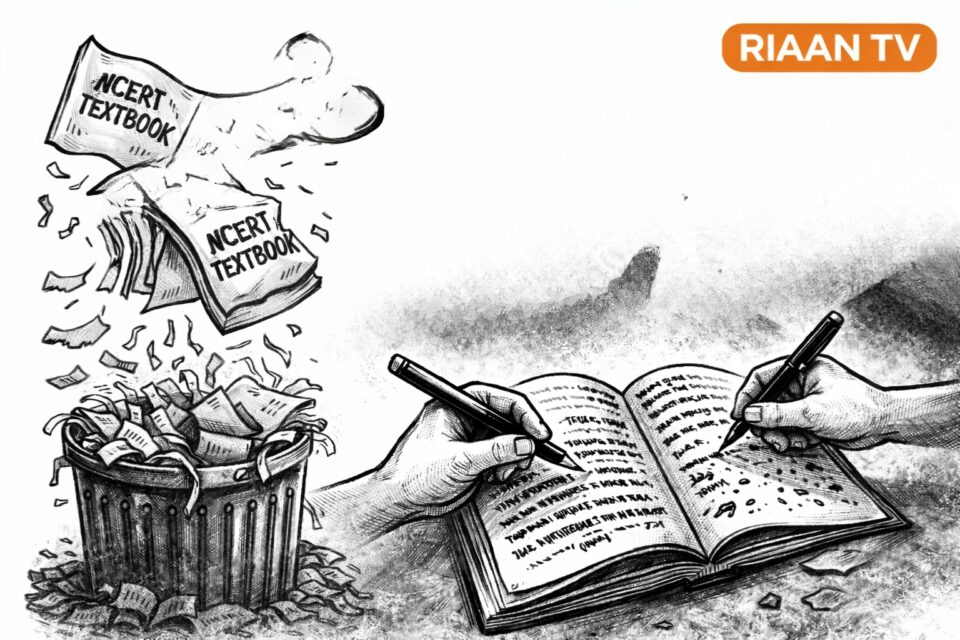
New Delhi, 26 February: The National Council of Educational Research and Training (NCERT) on Wednesday apologised for “inappropriate content” in a Class 8 social science textbook that referred to judicial corruption, after the Supreme Court expressed strong objection to the material. The council also put the circulation of the textbook on hold and said the chapter would be rewritten in consultation with appropriate authorities before the 2026–27 academic session.
The development followed a suo motu hearing by a three-judge bench led by Chief Justice of India Surya Kant, which took note of what it termed “objectionable” references to the judiciary. The Chief Justice remarked that no one would be permitted to defame the judiciary or cast aspersions on its integrity.
In its clarification, NCERT stated that certain textual material had “inadvertently crept into the concerned chapter” and described the lapse as an “error of judgement.” It reiterated that it holds the judiciary in the highest esteem and emphasised that the objective of the new textbooks is to strengthen constitutional literacy and institutional respect among students.
The episode highlights a broader tension within school curricula: how to introduce students to real-world institutional challenges—such as case backlogs and systemic pressures—without appearing to undermine the credibility of constitutional bodies. The now-withdrawn chapter reportedly referred to corruption, pendency of cases and shortage of judges as challenges facing the judicial system.
While academic discussions of institutional functioning are not uncommon in civics education, the strong response from the Supreme Court signals heightened sensitivity around how such themes are framed at the school level. NCERT’s decision to suspend the book’s circulation and undertake revisions suggests an attempt to recalibrate that balance.
The rewriting process, to be carried out in consultation with appropriate authorities, will likely shape how constitutional institutions are discussed in future editions—reflecting the continuing debate between fostering critical awareness and preserving institutional dignity in educational material.
