
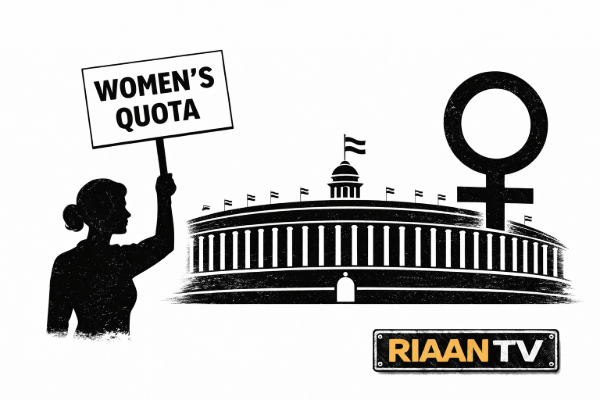
ew Delhi: The implementation of the women’s reservation law has brought the issue of delimitation back into focus, with Prime Minister Narendra Modi stating that no State will face discrimination during the process and that representation will not be reduced.
The law providing one-third reservation for women in the Lok Sabha and State Assemblies has already been notified, but its actual implementation depends on a fresh delimitation exercise based on updated population data.
Why delimitation matters now
Delimitation is the process of redrawing constituency boundaries and, in some cases, revising the number of seats based on population changes. This exercise is necessary before the women’s quota can be applied, as seats need to be identified and reserved accordingly.
For decades, delimitation has remained frozen to maintain balance between States with different population growth patterns. With the new law in place, the process is expected to resume, bringing both administrative and political implications.
PM’s assurance
Addressing concerns around the exercise, the Prime Minister said that no State — whether large or small — will be treated unfairly. He also made it clear that the number of Lok Sabha seats allocated to any State will not come down.
The statement comes amid apprehensions that States which have controlled population growth could lose relative political weight if representation is adjusted strictly on population figures.
Concerns from States
Some States, particularly in the south, have expressed concern that a population-based redistribution of seats could favour regions with higher population growth.
Their argument is that States that have stabilised population should not be placed at a disadvantage in terms of political representation.
At the same time, others maintain that representation should reflect current population realities, which is the basic principle behind delimitation.
What could change
During delimitation, constituency boundaries are redrawn and reserved seats are identified. With the women’s quota in place, one-third of these seats will be reserved for women on a rotational basis.
This could change the political landscape over time, as more women enter legislative bodies across the country.
However, the process will not happen immediately. It will depend on updated census data and decisions taken by the delimitation commission.
Larger picture
India has already seen the impact of reservation for women at the Panchayat level, where many States have implemented quotas, leading to increased participation of women in local governance.
Extending similar representation to Parliament and State Assemblies is expected to gradually reshape political leadership.
What lies ahead
The next steps involve conducting the delimitation exercise and setting up the framework for implementation of the quota.
While the Prime Minister’s assurance addresses immediate concerns, the issue is likely to remain part of political discussion until the process is completed.
For now, the development marks the beginning of a transition that could have long-term implications for representation and electoral politics in India.
