
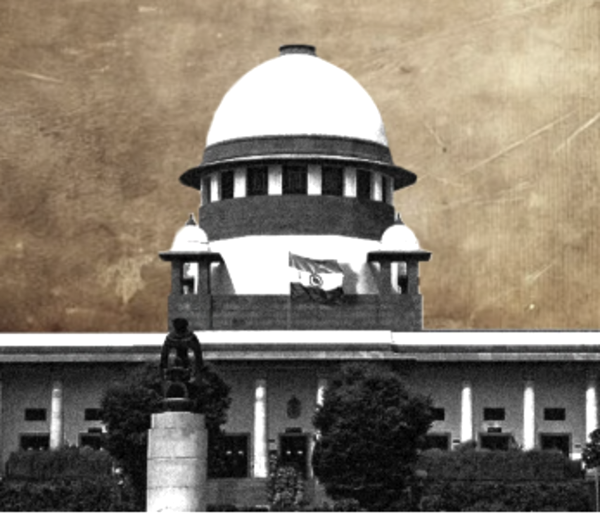
New Delhi: The Supreme Court has raised concerns over the growing use of sensitive government-held personal information by private companies and asked the Centre to examine safeguards against possible misuse of such data.
A bench headed by Chief Justice Surya Kant, along with Justices Joymalya Bagchi and V. Mohana, was hearing a plea concerning the alleged access and commercial use of information contained in Employees’ Provident Fund Organisation records and income tax data.
The issue before the court was not an allegation that government databases had been hacked or that there had been a confirmed data leak. The concern was different: whether information that citizens are required by law to provide to government authorities can subsequently become accessible to private entities through commercial verification systems without adequate safeguards.
The petitioner told the court that providing identifiers such as a PAN and UAN during a private verification process had allegedly resulted in access to employment-related information. The petition raised questions over the use of such information for employment verification, checks on dual employment and moonlighting, and other forms of employee profiling.
The Supreme Court did not entertain the public interest litigation, holding that the broader issue falls within the policy domain. But the bench asked the Centre to consider appropriate measures to prevent misuse of individual information by private enterprises.
The court’s intervention comes at a time when employment verification and financial screening are increasingly being carried out through digital platforms.
For citizens, the issue goes beyond employment checks. EPFO and income tax records contain information that can reveal a person’s employment history, earnings and financial affairs. Such information is collected for statutory purposes and is not ordinarily supplied by citizens with the expectation that it will become a freely accessible commercial resource.
The court’s concern therefore touches a much wider question: where should the line be drawn between legitimate verification and the commercial use of a person’s government-held data?
The Centre has now been asked to consider a mechanism, with the assistance of domain experts, to address the concern.
The proceedings do not establish that private companies have unlawfully accessed government databases. That distinction is important. The issue before the court is the need for safeguards where sensitive personal information may be retrieved or used by private entities.
With more services moving online, the question of who can access personal information, for what purpose and with whose authorisation is likely to become increasingly important.
