
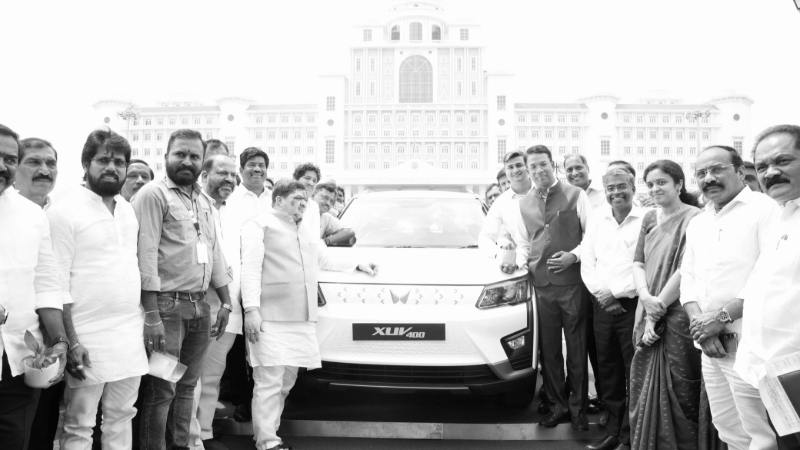
Hyderabad: Telangana’s latest push to encourage electric vehicle adoption among government employees marks a new approach in the state’s clean mobility strategy, with the Transport Department facilitating purchase discounts through discussions with EV manufacturers.
Transport Minister Ponnam Prabhakar described the initiative as a first-of-its-kind effort where a state government has attempted to secure direct price concessions from manufacturers instead of relying only on tax exemptions or subsidies.
Officials say the idea behind the initiative is to make electric vehicles more accessible by reducing upfront costs, which continues to be one of the biggest factors affecting EV adoption.
The state government has already provided incentives such as exemption from road tax and registration charges for electric vehicles. The latest move attempts to add another layer by encouraging institutional buyers such as government employees to consider switching to EVs.
Policy planners often see such institutional adoption as a way to build confidence among the general public. When a large workforce begins adopting a technology, it can gradually influence wider consumer behaviour.
Another focus area is infrastructure. Officials say expansion of charging facilities remains a key part of the state’s EV strategy. Plans are being discussed to increase charging stations across government offices and public locations so that EV users have better access to charging support.
Environmental considerations are also part of the policy thinking. With vehicle numbers rising in Hyderabad and other cities, electric mobility is being viewed as one of the long-term solutions to reduce emissions and manage urban pollution.
The government’s direction to departments to gradually move towards electric vehicles for official use is also expected to create steady demand and demonstrate operational feasibility of EV fleets.
Experts say states that move early in building EV ecosystems often benefit from associated investments such as charging networks, servicing infrastructure and potential manufacturing interest.
Telangana’s approach appears to be based on combining financial incentives, institutional adoption and infrastructure expansion rather than relying on a single policy intervention.
The success of such initiatives, however, will depend on factors such as affordability, charging convenience, vehicle performance and long-term user confidence.
As more states explore electric mobility as part of their transport planning, Telangana’s experiment with negotiated purchase concessions may be closely watched to see whether such institutional models can accelerate adoption.
