
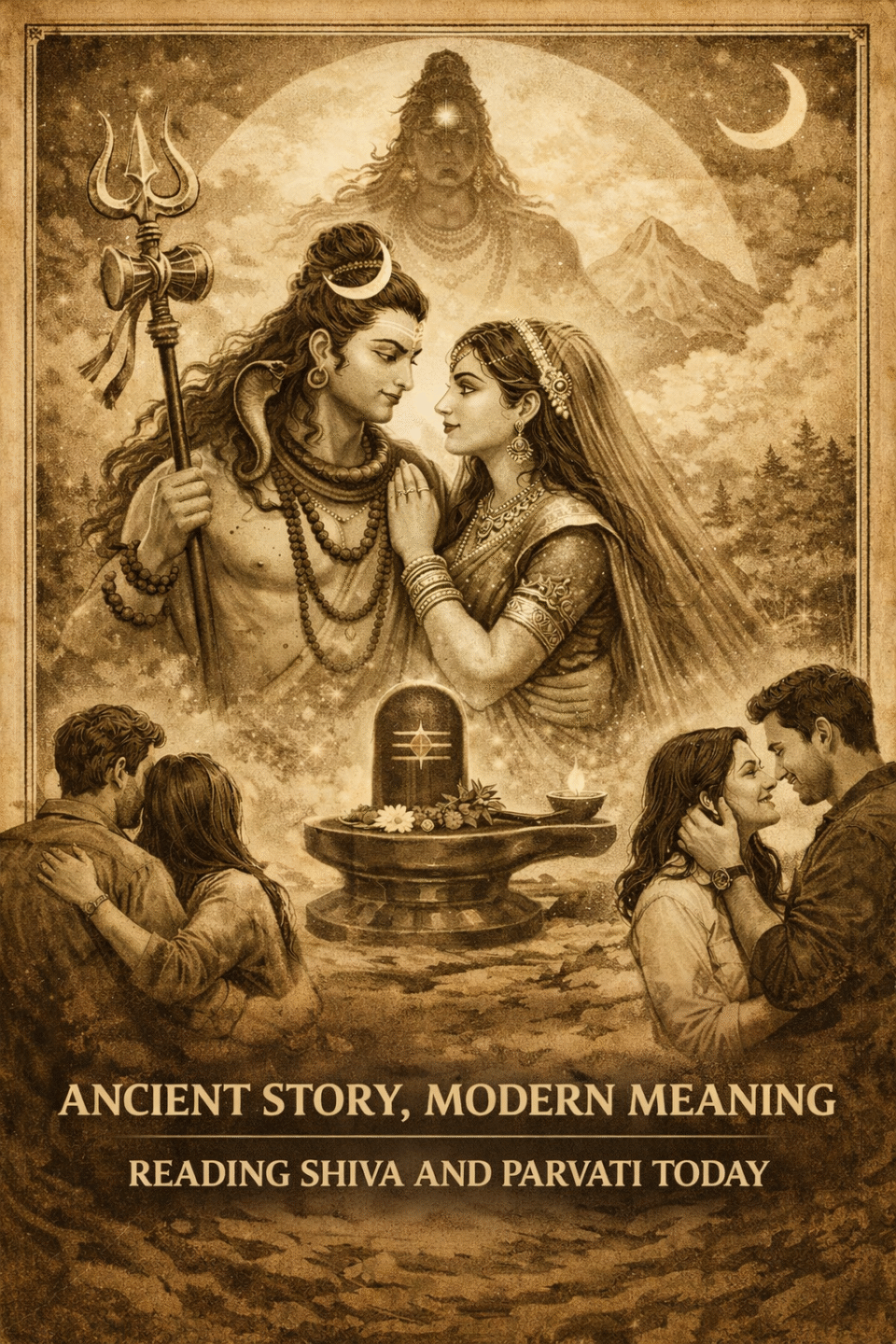
What Many People Draw From the Story Today
Observers often interpret the Shiva–Parvati narrative as a reminder that relationships do not depend on similarity of personalities. The characters are portrayed as different in temperament and lifestyle, yet the bond develops through understanding and continuity rather than immediate agreement.
For younger generations, the story is sometimes viewed as highlighting patience, personal space and mutual respect. Instead of constant agreement, the narrative suggests coexistence — where individuality remains intact while companionship grows over time.
The festival of Maha Shivaratri is traditionally associated with Lord Shiva, and in many cultural interpretations it is also connected with the union of Shiva and Parvati. Over time, the story has been read not only as mythology but as a reflection on companionship and human relationships.
In the narrative, the two characters are fundamentally different. Shiva is portrayed as detached and inward-looking, comfortable in solitude, while Parvati is patient, expressive and determined to build a shared life. Their relationship grows not by changing each other’s nature but by accepting it.
Writers and cultural observers often note that the story does not describe immediate harmony. Instead, it shows time, effort and understanding. Parvati’s persistence is balanced by Shiva’s gradual willingness to participate in family life, suggesting adjustment from both sides rather than expectation from one.
The partnership is therefore seen less as an ideal romance and more as coexistence of individuality and togetherness. Space and closeness appear side by side — a theme many people continue to relate to in modern relationships.
Another element frequently interpreted is respect. Neither character is shown as superior to the other; both hold distinct roles while sharing responsibility. The narrative emphasises continuity — staying through phases of difference, silence and change.
During Shivaratri, temples and homes observe traditional rituals, yet discussions around the festival often extend beyond worship to the meaning people draw from the story. For many, it symbolises that relationships are sustained through understanding temperament, allowing independence and maintaining commitment over time.
Seen this way, the Shiva–Parvati narrative continues to be retold not just as faith, but as a cultural reminder of companionship shaped by patience and mutual regard.
