
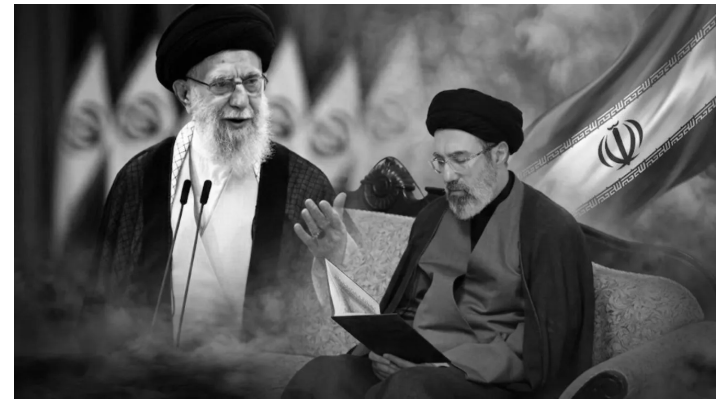
Dubai/Jerusalem: Iran’s decision to appoint Mojtaba Khamenei as the new Supreme Leader marks a significant moment in the country’s political history and could shape the trajectory of the ongoing conflict in West Asia.
The appointment, announced by Iran’s Assembly of Experts, comes shortly after the death of Supreme Leader Ayatollah Ali Khamenei during the early phase of the current military confrontation involving Iran, the United States and Israel. The move signals continuity within Iran’s political establishment, with the leadership structure remaining firmly aligned with hardline factions of the Islamic Republic.
A Rare Transfer of Power
Since the 1979 Islamic Revolution, Iran has witnessed only two previous supreme leaders. The selection of Mojtaba Khamenei as the third leader therefore represents a rare and consequential transition at the apex of the country’s power structure.
The Assembly of Experts — an influential body of 88 clerics responsible for selecting and overseeing the Supreme Leader — confirmed Mojtaba’s appointment through a decisive vote. The position places him at the centre of Iran’s political and military decision-making, granting authority over the armed forces, strategic policies and key state institutions.
Influence Without Formal Office
Although Mojtaba Khamenei has never held an elected government post, he has long been regarded as a powerful figure within Iran’s political system. Over the years he developed close ties with influential clerical circles and elements of the Revolutionary Guard, while also maintaining influence within networks of religious and economic institutions linked to the Supreme Leader’s office.
Analysts say this informal authority helped position him as one of the leading candidates for succession even before the recent conflict escalated.
Regional and Global Implications
The timing of Mojtaba Khamenei’s elevation is significant. Iran’s leadership transition is taking place amid one of the most volatile phases of regional tension in recent years, with ongoing military exchanges involving Iran, Israel and the United States.
The Supreme Leader holds the final authority over Iran’s defence strategy, nuclear policy and foreign relations. As a result, Mojtaba’s leadership could influence how Tehran responds to the evolving geopolitical situation.
For Washington and its allies, the appointment may signal that Iran’s core strategic posture is unlikely to shift dramatically in the near term. Observers believe the leadership change may reinforce the existing policy direction rather than usher in immediate reforms.
Debate Over Dynastic Succession
Mojtaba Khamenei’s rise has also revived debate about the nature of leadership in the Islamic Republic. Critics inside and outside Iran have previously argued that the possibility of the Supreme Leader’s son succeeding him risks creating a perception of dynastic rule within a system founded on revolutionary ideals.
Supporters, however, argue that the Assembly of Experts’ vote reflects institutional procedures and the clerical establishment’s confidence in his leadership.
A New Chapter for Iran
As Mojtaba Khamenei assumes the role of Supreme Leader, Iran enters a new phase under a younger leadership figure navigating both domestic pressures and heightened international tensions.
How he balances the demands of internal political stability, regional confrontation and global diplomacy may shape Iran’s direction — and the wider Middle East — in the years ahead.
