
Hyderabad: A team of heritage researchers has documented three historical sculptures at a Shiva temple in Charagonda village of Nagarkurnool district, drawing attention to the region’s lesser known archaeological heritage.
The findings were reported by members of Kotha Telangana Charitra Brundam, with researchers Yadeshwar Dandetikar and Kiran Goud conducting the field documentation.
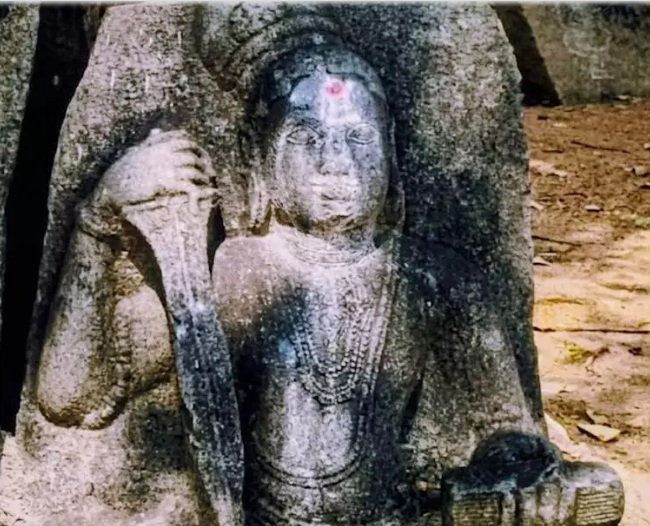
One of the sculptures has been identified as a Rajapanditagallu, believed to represent a royal scholar. The figure is shown seated in a half-lotus posture, holding a sword in one hand and a manuscript in the other. Researchers say this combination symbolises the traditional link between knowledge and authority.
The sculpture also shows detailed ornaments including a decorated headband and sacred thread, suggesting a person of status. Based on stylistic features, researchers believe the work reflects influences of the Rashtrakuta period.
Another sculpture found at the site depicts Bhairava in a fierce form associated with Shaivite traditions. The four-armed figure is shown holding symbolic objects including a drum, trident and sword. The carving also includes serpent ornaments and attendant figures, which researchers say indicate tantric influence and point to the Kakatiya period.
The third finding is a stone panel showing the Saptamatrikas. Researchers noted that the presence of Yami in place of Varahi suggests the sculpture may belong to a later medieval phase, possibly between the 14th and 15th centuries.
The iconographic study of the sculptures was prepared by heritage researcher Sriramoju Haragopal, who is associated with the heritage documentation group.
Researchers say such discoveries highlight the need for documentation and preservation of local temple heritage, particularly in rural areas where many historical artefacts remain unrecorded.
