
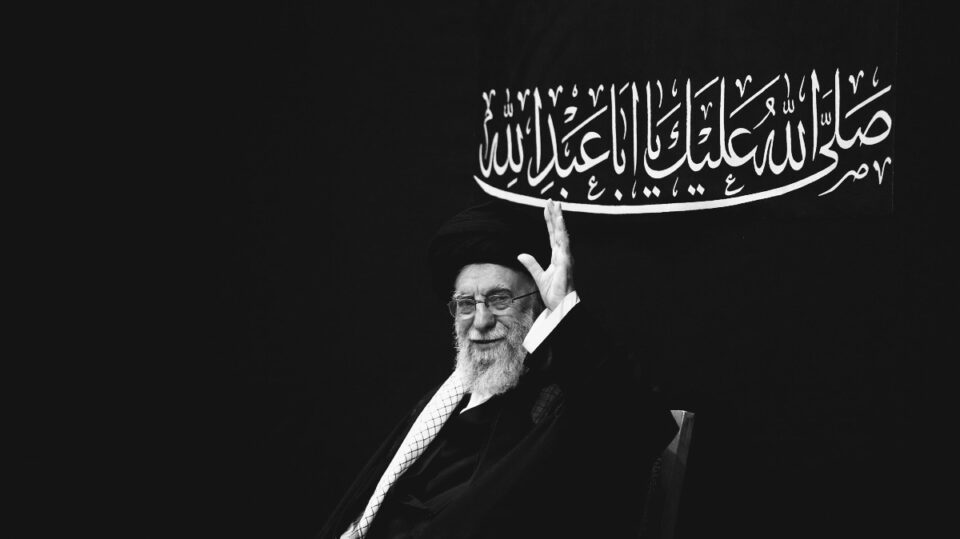
In discussions surrounding West Asian geopolitics and Iran’s revolutionary history, one lesser-known dimension often surfaces — the ancestral Indian connection of Ayatollah Ruhollah Khomeini, the architect of the 1979 Islamic Revolution.
While Khomeini is globally recognised as the founder of the Islamic Republic of Iran, historical records indicate that his lineage traces back to the Indian subcontinent.
The ‘Hindi’ Surname and Its Origin
Khomeini’s grandfather, Syed Ahmad Musavi Hindi, was born in the early 19th century in Kintoor, a town in present-day Barabanki district of Uttar Pradesh, located roughly 50 kilometres from Lucknow.
The suffix “Hindi” in his name is understood to denote his Indian origin. Historical accounts suggest that Syed Ahmad Musavi migrated from India to Iran during the 1800s, eventually settling in the town of Khomein — from which the family later adopted the surname “Khomeini.”
This migration was not unusual for the period, as religious scholars frequently travelled between South Asia and Persia for theological study, cultural exchange and religious leadership.
India–Iran Civilisational Intersections
The Indian connection of Khomeini is often cited as a reflection of centuries-old civilisational exchanges between India and Persia.
From the Mughal era to Shia scholarly networks, the flow of ideas, scholars and religious influences between North India and Iran shaped intellectual and theological traditions across regions.
Barabanki and surrounding Awadh regions were historically important centres of Shia scholarship, making it plausible that members of prominent religious families would relocate across borders for religious and educational pursuits.
Historical Record and Public Memory
Over the years, researchers and journalists have revisited this ancestral link, and the town of Kintoor occasionally draws attention for its association with the revolutionary leader’s lineage.
However, while genealogical references and documented migration patterns support the Indian-origin narrative, Khomeini himself rose to prominence entirely within Iran’s socio-political context. His leadership, ideology and revolutionary movement were shaped by Iranian domestic conditions rather than South Asian political influence.
Why This Link Matters
In contemporary geopolitics, such historical connections are sometimes revisited during diplomatic engagements or cultural discourse between India and Iran. The ancestral link, while symbolic, highlights the long-standing people-to-people and scholarly exchanges that predate modern nation-states.
It also underscores how interconnected historical identities can be — crossing present-day borders and reshaping narratives over generations.
Between History and Geopolitics
The Indian ancestry of Ayatollah Khomeini remains a documented historical footnote rather than a political determinant. Yet, it reflects a broader story: the deep-rooted cultural, religious and intellectual bridges between India and Iran that stretch back centuries.
In an era of evolving regional dynamics, such historical intersections continue to provide context to contemporary diplomatic and civilisational conversations.
