
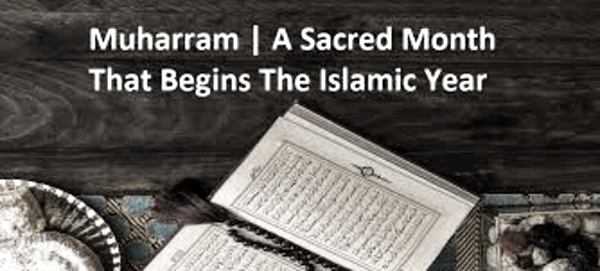
Hyderabad/Riyadh: The sighting of the crescent moon in Saudi Arabia on Monday evening has marked the beginning of Muharram 1448 AH, ushering in a new Islamic year for millions of Muslims around the world.
While New Year celebrations in many parts of the world are often associated with fireworks, parties and public festivities, the Islamic New Year arrives quietly. It is marked more by reflection than celebration, more by remembrance than festivity.
With the moon sighted, Tuesday, June 16, becomes the first day of Muharram, the opening month of the Islamic calendar and the beginning of the year 1448 AH.
For many Muslims, the occasion serves as a moment to pause and reflect on the passage of time, personal faith and the lessons of Islamic history.
The Islamic calendar traces its origin to one of the most significant events in Muslim history – the Hijrah, or migration, of Prophet Muhammad from Makkah to Madinah in 622 AD. The journey was not merely a physical relocation but a turning point that transformed a small persecuted community into a growing society built on faith, justice and collective responsibility.
Years later, during the caliphate of Umar ibn al-Khattab, the Hijrah was chosen as the starting point of the Islamic calendar, giving Muslims a distinct historical timeline rooted in one of the defining moments of their faith.
Muharram itself occupies a special place in Islamic tradition. It is one of the four sacred months mentioned in Islamic teachings and is regarded as a time of spiritual significance.
Across the Muslim world, the arrival of Muharram is observed in different ways. Many people use the beginning of the year as an opportunity for prayer, charity and self-reflection. Some observe voluntary fasting, particularly around the day of Ashura, which falls on the tenth day of the month.
Yet Muharram is remembered not only for the beginning of a new year but also for one of the most profound events in Islamic history.
For Shia Muslims especially, the first ten days of Muharram are a period of mourning and remembrance commemorating the martyrdom of Imam Hussain, the grandson of Prophet Muhammad, in the Battle of Karbala in present-day Iraq in 680 AD.
The story of Karbala continues to resonate across centuries because it is often viewed as a symbol of standing for truth and justice in the face of overwhelming odds.
In cities across India, including Hyderabad, preparations for Muharram observances begin well before Ashura. Religious gatherings, lectures, charitable activities and processions form part of the commemorations. The historic Bibi-ka-Alam procession in Hyderabad remains one of the most recognised Muharram observances in the country and attracts thousands of participants every year.
Religious scholars often note that Muharram carries a message that extends beyond a particular community. Themes of sacrifice, courage, patience and moral conviction continue to inspire people across generations.
The beginning of the new Islamic year also serves as a reminder of the shared rhythm of faith that connects Muslim communities across continents. From the Middle East to South Asia, Africa and Europe, the sighting of a thin crescent moon marks the same transition – the closing of one year and the beginning of another.
As 1448 AH begins, many believers will offer prayers for peace, guidance and wellbeing. For some, it is a time to set personal goals. For others, it is an occasion to revisit the lessons of history.
In a fast-moving world, Muharram arrives with a quieter message: that every new year is not only about moving forward, but also about remembering the values and sacrifices that shaped the journey.
