
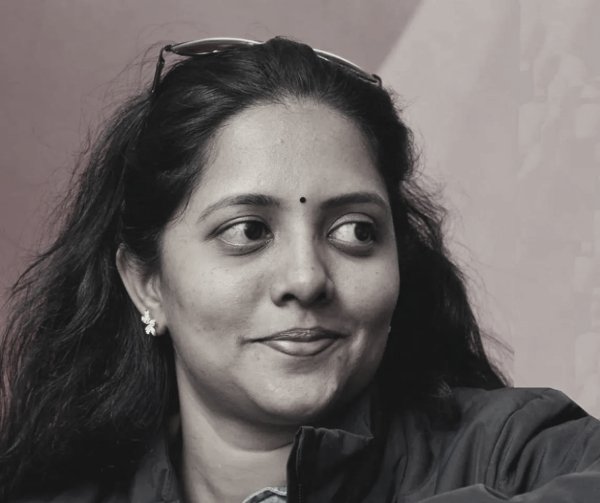
For M.A. Sneha, the problem was never deciding what her caste or religion was.
She had grown up without either.
The problem came when official paperwork repeatedly asked her to provide an answer.
A lawyer from Tirupattur in Tamil Nadu, Sneha was raised in a family that did not identify with caste or religion. Her birth certificate and school records did not carry either identity. What was ordinary at home, however, became complicated when she had to navigate a system built around filling in those boxes.
Eventually, she spent nine years trying to obtain official recognition of what her existing records already reflected: that she did not belong to any caste or religion.
On February 5, 2019, the Tirupattur Tahsildar issued her the certificate.
It brought a nine-year struggle to an end.
When leaving a box blank is not enough
Sneha had first applied for such a certificate in 2010.
According to contemporary reports, officials initially told her there was no precedent for issuing such a document. Her argument was straightforward: if people who identify with a caste or religion can have those identities recorded officially, why should someone who does not identify with either be left without a corresponding recognition?
Her eventual certificate stated that she did not belong to any caste or religion.
For Sneha, it was not about creating a new identity.
It was about having the state recognise the identity she had lived with all her life.
A family that made a different choice
Sneha’s story began at home.
Her parents chose not to assign caste or religious identities to their children. The decision was reflected in the family’s approach to official records as well.
Her birth and school records did not mention caste or religion. What might have appeared to be a simple absence on paper, however, became a difficult issue when official procedures demanded an answer.
Sneha was also a lawyer. That meant she understood the importance of documentation and the procedures through which citizens seek recognition from the state.
Yet even with that knowledge, obtaining a document that reflected her own circumstances took years.
Why the question is still alive
Sneha’s certificate in 2019 did not settle the larger question.
In June 2025, a Division Bench of the Madras High Court dealt with a similar demand by H. Santhosh and directed the Tamil Nadu government to put in place an appropriate mechanism enabling revenue authorities to deal with applications for “No Caste, No Religion” certificates. The court noted that similar certificates had already been issued in earlier cases.
But the legal picture has not been entirely uniform.
In February 2026, the Madurai Bench of the Madras High Court dismissed a petition by S. Chellamanickam. In that case, the petitioner said he wanted a certificate that did not mention caste or religion, but acknowledged that he had not formally relinquished his Hindu religion. The court held that, in those circumstances, the request could not be considered and said he could approach the authorities with proof of formal relinquishment.
Two months later, another case brought the issue back into the spotlight.
Actor-filmmaker Radhakrishnan Parthiban approached the Madras High Court after his application for a “No Caste No Religion” certificate remained pending. On April 20, 2026, Justice M. Dhandapani directed the Sholinganallur Tahsildar to issue the certificate by April 29, relying on the 2025 Division Bench order.
The developments show that the question is no longer only about one woman and one certificate.
It is about how the administrative system recognises people whose personal identity does not fit neatly into conventional categories.
The woman behind the certificate
It is easy to remember Sneha simply as the woman who obtained a “No Caste, No Religion” certificate.
But behind that piece of paper was a woman who spent nine years pursuing an answer from the system.
She was not asking the government to give her a new caste.
She was not asking it to assign her a religion.
She was asking for official recognition of the fact that she did not identify with either.
That makes her story unusual – and significant.
Her certificate was issued in 2019.
But the questions raised by her nine-year struggle continue to appear in courts and government offices.
And perhaps that is why Sneha’s story still matters.
Sometimes, a piece of paper is not about creating an identity. It is about asking the system to recognise the one a person has already chosen.
