
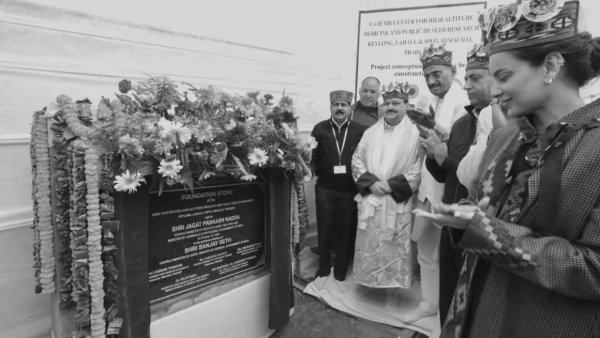
India is setting up its first dedicated Centre for High Altitude Medicine and Public Health Research at Keylong in Himachal Pradesh to study health challenges faced by people living in the Himalayas, including tribal communities and personnel serving in high-altitude areas. The foundation stone was laid on October 12 by Union Health Minister J. P. Nadda, with the centre expected to strengthen research into conditions shaped by low oxygen levels, extreme cold and changing climate patterns.
The centre, established under the Indian Council of Medical Research, will bring together research on high-altitude physiology, acclimatisation, climate-sensitive diseases and public health. The work is intended to generate scientific evidence relevant to communities living in remote mountain regions, where difficult terrain and harsh weather can complicate access to healthcare.
Research will also examine infectious and non-communicable diseases, maternal and child health, nutrition, mental health, occupational health and disaster medicine. These areas are particularly important in regions where healthcare services must respond to environmental conditions that differ sharply from those in the plains.
The initiative will involve collaboration between ICMR, the Armed Forces Medical Services and AIIMS Bilaspur. The research programme is also expected to explore telemedicine, drone-enabled delivery of medicines and digital health systems to improve healthcare access in hard-to-reach locations.
For Himalayan communities, the value of the centre will depend on whether research findings translate into practical medical support, earlier diagnosis and stronger public health services. High-altitude conditions can affect both residents and visitors, while extreme weather can make emergency treatment and the transport of medicines difficult.
The centre is intended to build India-specific evidence on these health risks and support the development of suitable interventions. Its work will also have relevance for personnel deployed in high-altitude areas, where prolonged exposure to low oxygen levels and extreme cold presents distinct medical challenges.
The initiative places research closer to the communities it is intended to serve. Its long-term impact will depend on sustained scientific work and the use of findings to improve healthcare delivery across India’s mountain regions.
