
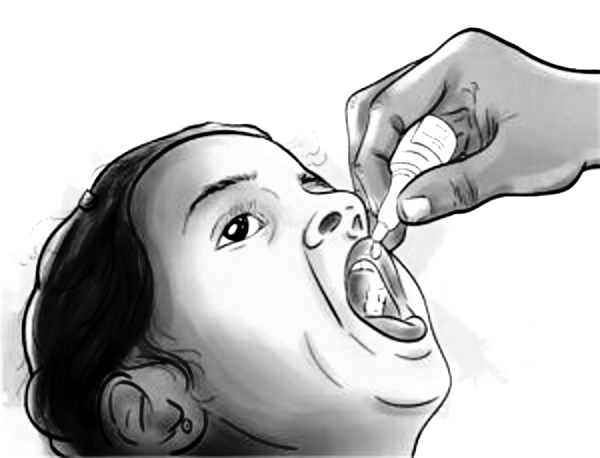
For many parents, it is a familiar sight. A volunteer at a neighbourhood health booth gently places two drops of vaccine into a child’s mouth, marks a tiny finger with indelible ink, and sends the family home in less than a minute.
The process is simple, free and takes only a few seconds.
Yet those two drops represent one of India’s biggest public health success stories.
The National Pulse Polio Immunisation Campaign began its latest round on Sunday, June 28, with vaccination booths opening across the country to administer oral polio vaccine to every child below the age of five years. The nationwide drive will continue until June 30, with healthcare workers visiting homes to vaccinate children who miss the first day’s booth programme.
The message from health authorities remains clear: every child must receive the vaccine, even if they have already completed their routine immunisation schedule.
To many younger parents, this often raises a question.
If India was declared polio-free years ago, why are children still being given polio drops?
The answer lies in prevention.
Although India eliminated wild poliovirus and was officially certified polio-free by the World Health Organization in 2014, the disease has not disappeared globally. Cases continue to be reported in a few countries, and international travel means the risk of imported infections cannot be completely ruled out.
Public health experts say maintaining high immunity among children is the best defence against the virus returning.
That is why the Pulse Polio campaign continues to reach millions of children every year.
Unlike routine childhood immunisation, which protects an individual child, Pulse Polio campaigns aim to create community-wide immunity by vaccinating every eligible child over a short period.
This approach helps interrupt any possible transmission of the virus before it can spread.
The campaign is one of the largest public health exercises undertaken anywhere in the world.
Across cities, towns and villages, vaccination booths have been set up at government hospitals, Primary Health Centres, Community Health Centres, Anganwadi centres and other public locations.
Special transit booths have also been established at bus stations, railway stations and airports to ensure children travelling with their families are not left out.
From Monday onwards, thousands of healthcare workers, Accredited Social Health Activists (ASHAs), Anganwadi workers and mobile medical teams will begin door-to-door visits to identify children who could not attend the vaccination booths.
The campaign reflects the enormous logistical effort behind India’s public health programmes.
Long before vaccination day, health workers prepare beneficiary lists, arrange vaccine supplies, train volunteers and identify high-risk areas. On the day itself, teams work from early morning to ensure maximum coverage.
Parents are also being reminded that minor illnesses such as a cold, cough or mild fever are not reasons to postpone vaccination.
Health experts emphasise that the oral polio vaccine is safe for children with mild illnesses and that even newborn babies should receive the drops if they fall within the eligible age group.
Another common misconception is that children who have already received routine injectable vaccines no longer require Pulse Polio drops.
Doctors explain that the campaign dose is an additional protective measure designed to strengthen immunity across the community rather than replace routine vaccination.
Every additional child vaccinated helps reduce the possibility of virus circulation.
The campaign also highlights how India’s healthcare system has evolved over the past three decades.
In the 1980s and early 1990s, thousands of children across the country developed lifelong disabilities because of poliovirus infection. Images of children affected by paralytic polio were once common in hospitals and rehabilitation centres.
Today, an entire generation has grown up without witnessing those scenes.
That achievement is the result of sustained immunisation campaigns involving governments, health workers, volunteers, international agencies and, most importantly, millions of parents who ensured their children received the vaccine.
The success, however, also brings a challenge.
As memories of the disease fade, some families begin to underestimate its seriousness.
Health authorities say this is precisely why awareness remains essential. Diseases that disappear from public view can return if vaccination coverage declines.
The National Pulse Polio Campaign is therefore not merely about administering two drops of vaccine.
It is about protecting one of India’s greatest public health achievements and ensuring that future generations know polio only through history books, not through personal experience.
For parents, the responsibility remains simple.
If there is a child below five years in the family, those two drops can make all the difference.
