
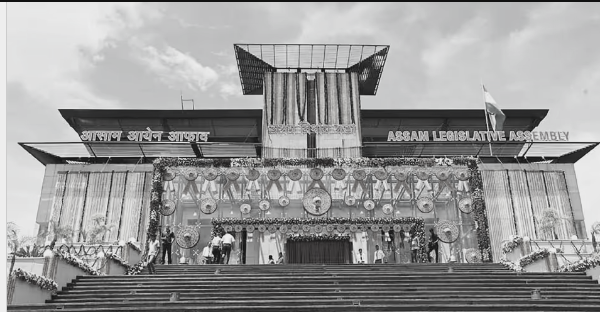
Guwahati: The Assam Legislative Assembly is set to witness an important day of legislative business as the proposed Uniform Civil Code (UCC) Bill is expected to be introduced on Monday during the third day of the ongoing Assembly session.
Chief Minister Himanta Biswa Sarma is expected to table the proposed Uniform Civil Code Assam Bill in the House, marking a significant development in the state’s legislative agenda.
The move has drawn attention both within and outside the state, as discussions around a Uniform Civil Code continue to remain part of wider national conversations on legal reforms and governance.
The introduction of the Bill is expected to initiate formal legislative discussion in the Assembly, where members may debate its objectives, scope and implementation framework in the coming stages of the process.
Although detailed provisions of the proposed legislation are yet to come up for discussion in the House, the government’s decision to bring the Bill reflects its stated focus on legal and administrative reforms.
The Assembly’s agenda for the day is not limited to the UCC proposal alone.
Finance Minister Ajanta Neog is also expected to introduce a resolution related to the Women Harassment Prevention Act.
The proposed discussion is likely to focus on strengthening institutional and legal mechanisms linked to women’s safety and workplace-related concerns.
In addition, the House is also expected to deliberate on a resolution concerning 33 per cent reservation for women, another issue that has attracted public and political attention.
The combination of these legislative proposals has made the current Assembly session one of the closely watched sessions in recent months.
Political observers note that introducing multiple governance and social policy-related measures in the same session may generate wider debate on issues relating to legal reform, representation and public policy.
The proposed UCC Bill comes at a time when several states across the country have been discussing changes in legal frameworks linked to civil matters.
Supporters of such reforms often argue that standardisation of legal processes can improve administrative consistency and create uniform application of certain civil provisions.
At the same time, discussions around such proposals generally attract multiple viewpoints, with legal, social and political dimensions often becoming part of public debate.
The women-related proposals scheduled in the Assembly are also expected to receive attention, particularly in the context of increasing focus on representation and institutional safeguards.
As the proceedings continue, attention will remain on the government’s presentation of the proposed Bill, responses from opposition members and the direction of debate inside the House.
The Assembly session is expected to continue discussions on additional legislative and policy matters in the coming days.
