
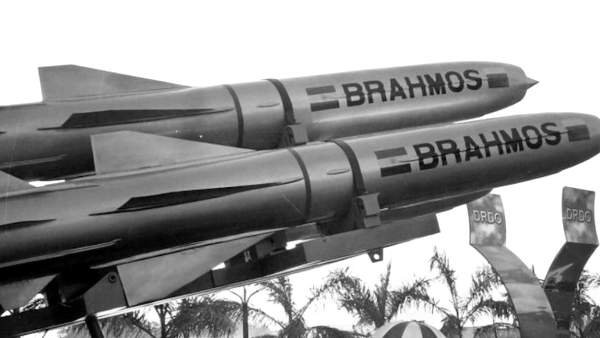
New Delhi: Reports that the United Arab Emirates is exploring the possibility of acquiring India’s BrahMos supersonic cruise missile and Akashteer air defence system signal more than a potential arms deal. They reflect India’s growing emergence as a defence exporter and a changing security landscape in West Asia.
According to reports, discussions between India and the UAE are at an early stage, but the very fact that two of India’s most prominent defence platforms are being considered by a key Gulf nation is being viewed as a significant development.
For years, India was known primarily as one of the world’s largest importers of defence equipment. Today, that narrative is gradually changing.
The BrahMos missile, jointly developed by India and Russia, has become one of India’s most recognisable defence products. Capable of travelling at supersonic speeds and launched from land, sea and air platforms, the missile has attracted international attention because of its speed, precision and operational flexibility.
The Akashteer system represents another side of India’s defence modernisation. Unlike conventional missile systems, Akashteer functions as an integrated air-defence command and control network. It is designed to collect information from radars, sensors and multiple air-defence assets, helping military commanders identify and respond to aerial threats more effectively.
For the UAE, the interest comes at a time when regional security calculations are evolving rapidly.
The Middle East has witnessed heightened tensions in recent years, including missile and drone attacks, disruptions to shipping routes and concerns over the security of critical energy infrastructure. Countries across the Gulf are increasingly investing in technologies that can strengthen air defence and improve their ability to respond to emerging threats.
The Strait of Hormuz, one of the world’s most important energy corridors, remains a key strategic concern for Gulf nations. Any disruption to maritime traffic in the region has global economic consequences, making defence preparedness a top priority.
Analysts note that the UAE’s interest in Indian systems also reflects a broader trend of diversification.
Traditionally, Gulf countries have relied heavily on defence equipment supplied by the United States and European manufacturers. However, recent years have seen several countries seek a wider range of suppliers to reduce dependence on any single source and gain greater strategic flexibility.
India’s growing defence industry offers an additional option.
Unlike some major defence exporters, India also shares strong political and economic ties with the UAE. The relationship between the two countries has expanded significantly over the past decade, covering trade, energy, investment, technology and security cooperation.
The potential defence discussions therefore fit within a broader framework of deepening bilateral relations.
Another factor attracting attention is the operational credibility of Indian-made systems.
Defence exports often depend not only on technical specifications but also on proven performance. India’s recent demonstration of indigenous defence capabilities and increased investment in military modernisation have strengthened international interest in its defence products.
The numbers highlight this transformation.
A little over a decade ago, India’s defence exports were relatively modest. Today, the country is exporting military equipment to dozens of nations, with export figures crossing the $4-billion mark. From patrol vessels and radars to missiles and electronic warfare systems, India’s defence manufacturing sector is steadily expanding its global footprint.
For New Delhi, every major export agreement serves two purposes. It generates economic opportunities for domestic defence manufacturers and reinforces India’s strategic influence abroad.
For the UAE, acquiring systems from India would strengthen an already expanding partnership with one of Asia’s fastest-growing economies.
Whether the discussions ultimately lead to a formal agreement remains to be seen. Defence negotiations are often lengthy and involve technical evaluations, pricing considerations, strategic assessments and government approvals.
However, even at this preliminary stage, the reported talks underline a larger reality: India is no longer viewed solely as a buyer in the global arms market.
Increasingly, it is being seen as a country capable of designing, manufacturing and exporting advanced defence technologies to international partners.
If the discussions progress further, they could mark another milestone in India’s journey from a major defence importer to an increasingly influential defence exporter.
