
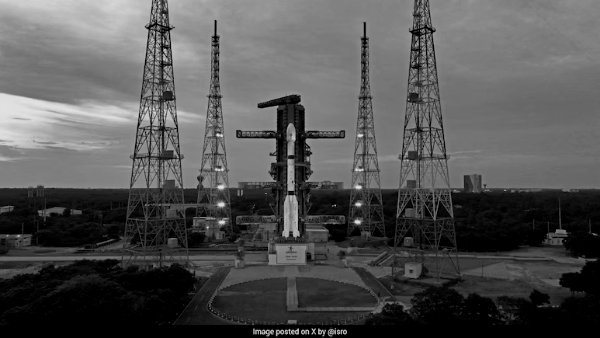
India successfully launched its latest Earth-observation satellite EOS-05 early Friday from the Satish Dhawan Space Centre in Sriharikota, adding another important capability to the country’s space-based monitoring system.
The satellite was carried by the GSLV-F17 rocket and lifted off at 2:55 am. Weighing about 2,367 kg, EOS-05 has been designed to operate from geosynchronous orbit, allowing it to provide repeated observations of the same region rather than passing over it only occasionally.
That capability matters on the ground.
The satellite’s observations are expected to support agriculture, water-resource management, disaster monitoring, environmental studies and urban planning. For a country dealing with floods, droughts, changing weather patterns and rapidly expanding cities, timely satellite data can make a practical difference to how authorities plan and respond.
Why this launch matters
Earth-observation satellites are not only about space technology.
Their data can help governments monitor crops, assess damage after natural disasters, track changes in land and water resources and improve planning in vulnerable areas.
The ability to observe a region repeatedly is particularly useful when conditions are changing quickly. During a disaster, for example, updated imagery can help authorities understand which areas have been affected and where resources may need to be directed.
For farmers and water managers, satellite observations can also provide information that is difficult to gather consistently across such a large country through ground surveys alone.
A bigger step for India’s space programme
The launch also comes as India’s space programme is expanding beyond traditional satellite missions, with increasing emphasis on Earth observation, communications, navigation and commercial applications.
The importance of such missions will ultimately be measured not only by a successful launch but by how effectively the information reaches government agencies, researchers, industries and people who can use it.
That is where India’s next challenge lies.
A satellite can collect enormous amounts of information from orbit. The real public benefit comes when that information is converted into decisions – whether it is preparing for a flood, estimating crop conditions, managing water or planning a growing city.
For India, the EOS-05 mission therefore represents more than another successful rocket launch.
It is another step towards building a country where space technology is increasingly used to solve problems on the ground.
