
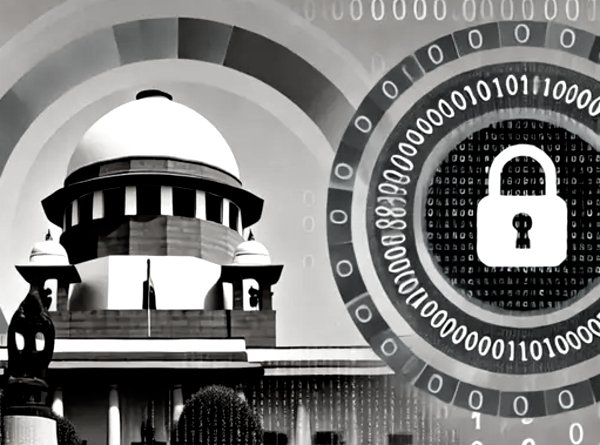
New Delhi- Personal information held by the government should not become an open source of data for private companies, the Supreme Court has told the Centre while raising concerns over the possible misuse of information contained in EPFO and income-tax records.
A bench headed by Chief Justice of India Surya Kant, along with Justices Joymalya Bagchi and V Mohana, declined to entertain a public interest petition seeking wider judicial intervention but asked the Centre to consider safeguards to prevent misuse of sensitive personal information.
The issue is important because government databases contain information that most citizens are required to provide by law.
Employees’ Provident Fund records can contain employment-related details, while income-tax records carry information about a person’s financial affairs.
The question before the court was whether such information can be accessed or used by private entities for purposes such as employment verification and other forms of screening without adequate safeguards.
The court did not make a finding that a particular private company had unlawfully obtained or misused government data. The concern raised was about the larger system and the safeguards needed to prevent such misuse.
That distinction matters.
In a digital economy, verification has become increasingly common. Employers and service providers routinely ask people for identifiers and documents to establish their identity, employment history or financial status.
But convenience cannot remove the question of consent.
A person may give information to the government because the law requires it. That does not automatically mean the same information should become available for unrelated commercial purposes.
The Supreme Court’s intervention therefore touches a basic question of digital privacy: who is entitled to see information about you, why do they need it and how long can they retain it?
The Centre has been asked to consider appropriate safeguards.
For ordinary citizens, the issue is particularly relevant because much of their personal information now exists in interconnected digital systems.
The more databases are linked, the greater the need for clear rules governing access and use.
The court’s concern is therefore not limited to EPFO or income-tax records. It points towards a larger challenge for India’s digital economy: building systems that make legitimate verification easier without turning personal information into a commodity that can circulate without adequate protection.
