
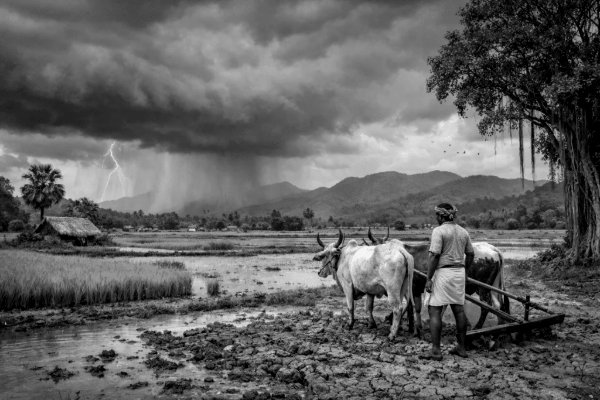
India’s rainfall deficit is raising concerns over agricultural production, irrigation and rural livelihoods as farmers prepare for the Rabi season, with drought declarations in parts of southern India highlighting the risks of inadequate rainfall. The situation has prompted renewed calls for careful crop planning and water management, particularly in areas where farming depends heavily on seasonal rains.
Andhra Pradesh has declared 388 mandals across 21 districts drought-affected for the 2026 Kharif season. Of these, 283 mandals have been classified as severely affected and 105 as moderately affected. The declaration followed a substantial rainfall shortfall during the June-August period, raising concerns about crop performance and the financial position of farming households.
The implications extend beyond the current harvest. Lower rainfall can affect soil moisture, reservoir storage and groundwater recharge, leaving farmers with fewer options when planning the next crop. Those dependent on rain-fed agriculture are particularly vulnerable because additional irrigation may not be available or affordable.
In Telangana, Revenue and Housing Minister Ponguleti Srinivasa Reddy has advised farmers to reconsider undertaking Yasangi, or Rabi, cultivation amid rainfall concerns and the potential effects of El Niño. The warning reflects the uncertainty facing farmers as they decide whether to invest in seeds, fertilisers, labour and irrigation for another crop cycle.
Such decisions carry financial consequences. Cultivation undertaken without sufficient water can expose farmers to losses, while leaving land uncultivated can reduce household income and employment opportunities for agricultural labourers. Farmers therefore need reliable local rainfall information, reservoir assessments and crop-specific advice before making investment decisions.
Water availability is central to the coming season. Reservoir levels, groundwater conditions and the distribution of available irrigation water will influence which crops can be cultivated and where. Efficient irrigation, rainwater harvesting and the protection of local water bodies can help reduce pressure, although these measures cannot immediately compensate for a major rainfall shortfall.
The response also requires timely support for affected farmers. Crop-loss assessments, access to agricultural credit, insurance settlements and practical advice on alternative crops can help households manage the risks. Support must also reach tenant cultivators and agricultural workers, whose losses may not always be reflected in landownership records.
For state governments, the immediate task is to balance the need to protect water supplies with the livelihoods of farming communities. Advisories must be based on local conditions rather than a uniform approach, because rainfall, reservoir storage and irrigation access can vary sharply between districts.
The coming Rabi season will test how effectively agricultural planning responds to uncertain water availability. For farmers, the priority is to avoid preventable losses while retaining viable options for the months ahead. For policymakers, the challenge is to ensure that water management and relief measures reach those most exposed to the shortfall.
