
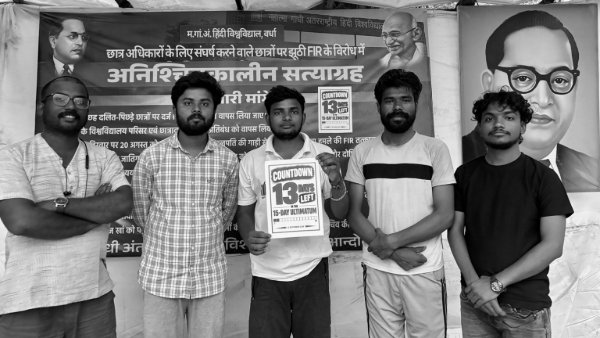
A dispute that began with an administrative decision in 2022 has turned into a three-month student protest at Mahatma Gandhi Antarrashtriya Hindi Vishwavidyalaya in Wardha, Maharashtra. Students are demanding the reopening of departments, restoration of PhD admissions and the revival of several language courses that were discontinued or relocated.
The university is India’s only institution dedicated specifically to Hindi, making the dispute particularly relevant to questions about what a specialised public university should provide to its students.
The protest began on July 3, when more than 250 students submitted a petition seeking changes to the university’s academic structure. Six students have since faced an FIR, adding a legal dimension to what began as an education-related dispute.
What changed in 2022?
In 2022, the university relocated its Women Studies and Film Studies departments to a regional centre in Prayagraj, citing public benefit and efforts to improve enrolment.
Students say the decision affected their access to those programmes and contributed to a wider reduction in academic opportunities.
They are also demanding the resumption of PhD admissions that have remained halted since 2022.
The dispute therefore involves more than one department. It concerns the range of courses available to students at a specialised university and the process through which academic programmes are opened, moved or discontinued.
Language courses are part of the dispute
Students are also seeking the revival of diploma and certificate courses in languages including French, Japanese, Chinese and Urdu.
At first glance, language courses may appear peripheral to the main purpose of a Hindi university.
But multilingual education can have practical value in research, translation, diplomacy, journalism, tourism, international relations and academic collaboration.
For students, the loss of a course is not simply a change in a prospectus. It can alter what they can study without leaving the institution.
When a campus protest becomes a legal issue
The filing of an FIR against six students has intensified the dispute.
Student protests are not automatically protected from legal consequences, and individual conduct during a demonstration must be assessed according to the applicable law. At the same time, the use of criminal proceedings in an academic dispute raises questions about how universities and students resolve disagreements over institutional decisions.
The students have continued their protest for around three months, according to the report.
What students are actually asking for
Their demands include:
Reopening the relocated departments
Resuming PhD admissions
Restoring discontinued language courses
Reviewing the 2022 academic decision
These demands now require a response from the university administration that addresses both academic policy and the students’ concerns.
The larger issue for public universities
Universities regularly change courses and departments based on enrolment, faculty availability, funding and institutional priorities.
Students, however, plan their education around the programmes they expect to access.
That creates a basic governance question: how much consultation should take place before an institution changes a programme that students have already built their academic plans around?
There is no single answer for every university. But transparency becomes particularly important when a programme is discontinued, admissions remain suspended for several years or students are required to travel to another centre.
At Mahatma Gandhi Antarrashtriya Hindi Vishwavidyalaya, a decision made in 2022 is still shaping student protests in September 2026.
