
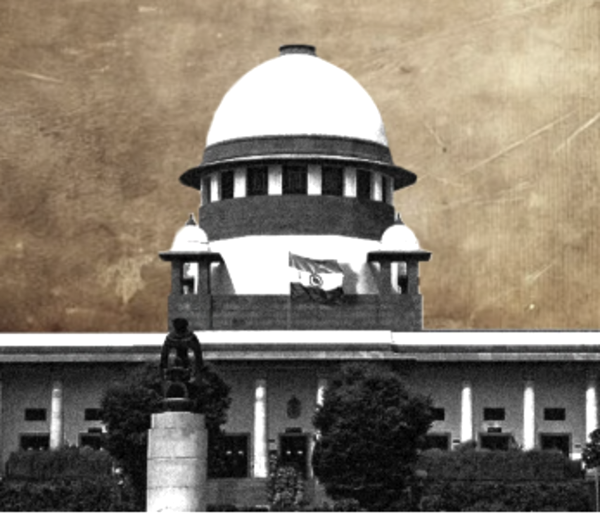
New Delhi: The Supreme Court has criticised the practice of prolonged litigation by influential litigants, observing that such cases can consume valuable judicial time while ordinary people wait for years for their matters to be heard.
A Bench of Justices Vikram Nath and Sandeep Mehta made the observations while dealing with a dispute that had remained in litigation for 11 years across different forums, including the Bar Council of India, the Bombay High Court and the Supreme Court.
The Court imposed a cost of ₹5 lakh each on the two parties involved in the dispute, holding that neither side had approached the court with clean hands.
The judges noted that both parties had complained of wrongs allegedly committed by the other, while their own conduct had contributed significantly to the prolonged litigation.
The observations came against the backdrop of the court’s concern over the pressure on the judicial system and the long wait faced by ordinary litigants.
The Supreme Court’s remarks underline a broader concern over cases in which parties with greater financial and legal resources are able to pursue disputes across multiple forums for extended periods.
For litigants who lack similar resources, prolonged proceedings can mean years of waiting before their cases receive a final hearing.
The Court’s decision also sends a message that access to judicial remedies carries a corresponding responsibility on parties and their lawyers to use the process responsibly.
The case was among matters that had consumed judicial and institutional time over several years, prompting the Bench to take a critical view of the manner in which the dispute had been pursued.
The order is significant beyond the individual dispute as it addresses the wider question of how judicial resources should be used in a system already carrying a substantial backlog of cases.
