
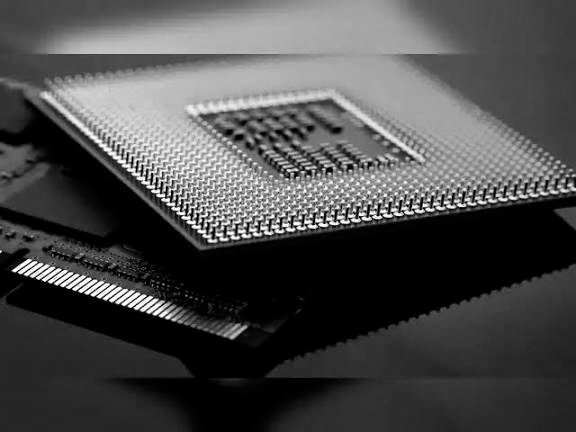
New Delhi: India’s semiconductor ambitions received two significant commitments on Thursday as US chip-equipment company Applied Materials announced plans to invest $5 billion in India over the next decade, while Dutch chipmaker Nexperia announced a partnership with Tata Electronics for semiconductor production and packaging in the country.
The announcements came as SEMICON India brought together more than 600 companies from 52 countries in New Delhi, giving the country’s semiconductor programme a major international platform. The commitments add momentum to India’s attempt to build a domestic chip ecosystem, although the country still has a long way to go before large-scale semiconductor fabrication becomes an established part of its manufacturing base.
What is Applied Materials investing in?
Applied Materials, one of the world’s major semiconductor equipment companies, plans to invest $5 billion in India over the next ten years.
The company said the investment will focus on areas including research, supply-chain development and workforce expansion. It is not simply a commitment to manufacture finished chips in India; equipment companies occupy an important position in the semiconductor production chain because chip fabrication depends on highly specialised machinery and technology.
That makes the announcement significant for India’s wider semiconductor strategy.
A semiconductor industry cannot be built around one fabrication plant alone.
It needs equipment suppliers, materials, engineering expertise, research institutions, skilled workers, testing facilities, packaging operations and companies that can supply components and services.
What does the Nexperia-Tata partnership add?
Nexperia has entered a strategic partnership with Tata Electronics to produce and package semiconductor chips in India.
The agreement includes plans to manufacture Nexperia’s power-control chips at Tata’s facility in Dholera, Gujarat, while chip testing and assembly will take place at Tata’s packaging facility in Jagiroad, Assam. Financial details of the partnership were not disclosed.
The partnership is notable because Nexperia supplies basic semiconductor components used in industries including automotive and consumer electronics.
It also gives India’s semiconductor programme a connection to an established global chip company rather than relying entirely on domestic companies building capabilities from scratch.
Why does chip packaging matter?
Semiconductor manufacturing is often associated with wafer fabrication, the highly complex process through which chips are created on silicon wafers.
But fabrication is only one part of the chain.
Chips also need to be assembled, tested and packaged before they can be incorporated into electronic products.
India has already attracted investment into chip packaging and testing, and those facilities can provide a practical entry point into semiconductor manufacturing even while large fabrication plants are being developed.
That is why the Tata-Nexperia arrangement matters.
It adds another layer to the domestic ecosystem.
Has India started manufacturing advanced chips at scale?
Not yet.
India has approved a number of semiconductor projects under its incentive programme, and commercial production has begun at some chip-packaging facilities. But the country has not yet reached the stage of producing chips from a large-scale fabrication facility.
Reuters reported that Tata Electronics’ planned $10 billion fabrication plant in Gujarat has also been delayed by nearly two years.
That is an important reality check.
Investment announcements are significant, but they are not the same as production.
A functioning semiconductor industry requires years of construction, specialised equipment, technical training, supply-chain development and quality control before output reaches commercial scale.
Why is India trying to build a semiconductor industry?
The global semiconductor industry has become strategically important because chips are used in almost every modern electronic system.
Cars, telecommunications equipment, industrial machinery, computers and consumer electronics all depend on semiconductors.
The rise of artificial intelligence has increased demand for advanced computing infrastructure, while geopolitical tensions have encouraged companies and governments to diversify supply chains.
India is trying to position itself as one of the locations that can benefit from that diversification.
The country has committed more than $21 billion through semiconductor incentives, according to Reuters. The government expects domestic semiconductor consumption to rise sharply over the coming years, reaching an estimated $110 billion by 2030.
What does this mean for Indian jobs?
The immediate employment impact will not come only from semiconductor factories.
The sector requires engineers, technicians, equipment specialists, software professionals, researchers, quality-control staff and workers trained in specialised manufacturing processes.
Applied Materials has specifically linked its investment to workforce development.
That could create opportunities for Indian engineering graduates and technical institutions, but the skills required are highly specialised. A large pool of general engineering graduates does not automatically translate into a semiconductor workforce.
Training therefore becomes part of the industrial strategy.
Universities, technical institutes and companies will need to work together to develop skills that match actual manufacturing and research requirements.
What are the risks?
The semiconductor industry is expensive and technically demanding.
Large fabrication plants require huge capital investments, stable utilities, specialised infrastructure and reliable supply chains. Delays can increase costs and push back commercial production.
There is also intense international competition.
India is not the only country trying to attract chip manufacturing. Taiwan, South Korea, Japan, the United States and several Southeast Asian economies already have established semiconductor ecosystems or are expanding them.
India’s advantage will therefore depend on whether announced projects become operational facilities and whether companies can build commercially competitive operations around them.
What should India watch next?
Several milestones will matter:
Completion of major semiconductor facilities
Commercial production timelines
Workforce training
Supplier development
Chip-testing capacity
Research investment
Export potential
The government has already approved multiple projects, but the industry’s credibility will increasingly depend on delivery.
The latest announcements are therefore significant, but they should be measured against what gets built, when production begins and whether Indian facilities become part of global semiconductor supply chains.
Applied Materials’ planned $5 billion investment runs over the next decade, while the Tata-Nexperia partnership adds chip production and packaging plans to India’s expanding semiconductor programme.
RIAAN.TV | NEWS BULLETIN
